
Pet Shipping from Canada to Israel
Relocating a pet from Canada to Israel requires careful sequencing, but the process is clear once you understand the steps. Plan for four to six months of preparation and a total cost that varies, depending on pet size, routing, and travel method. Israel requires a rabies titre test (a blood test confirming adequate antibody levels), restricts nine dog breeds, and uses its own health certificate form that is only available from your local CFIA office. These specifics matter, and getting them right means your pet clears inspection at Ben Gurion Airport without delay. Here’s exactly how it works.
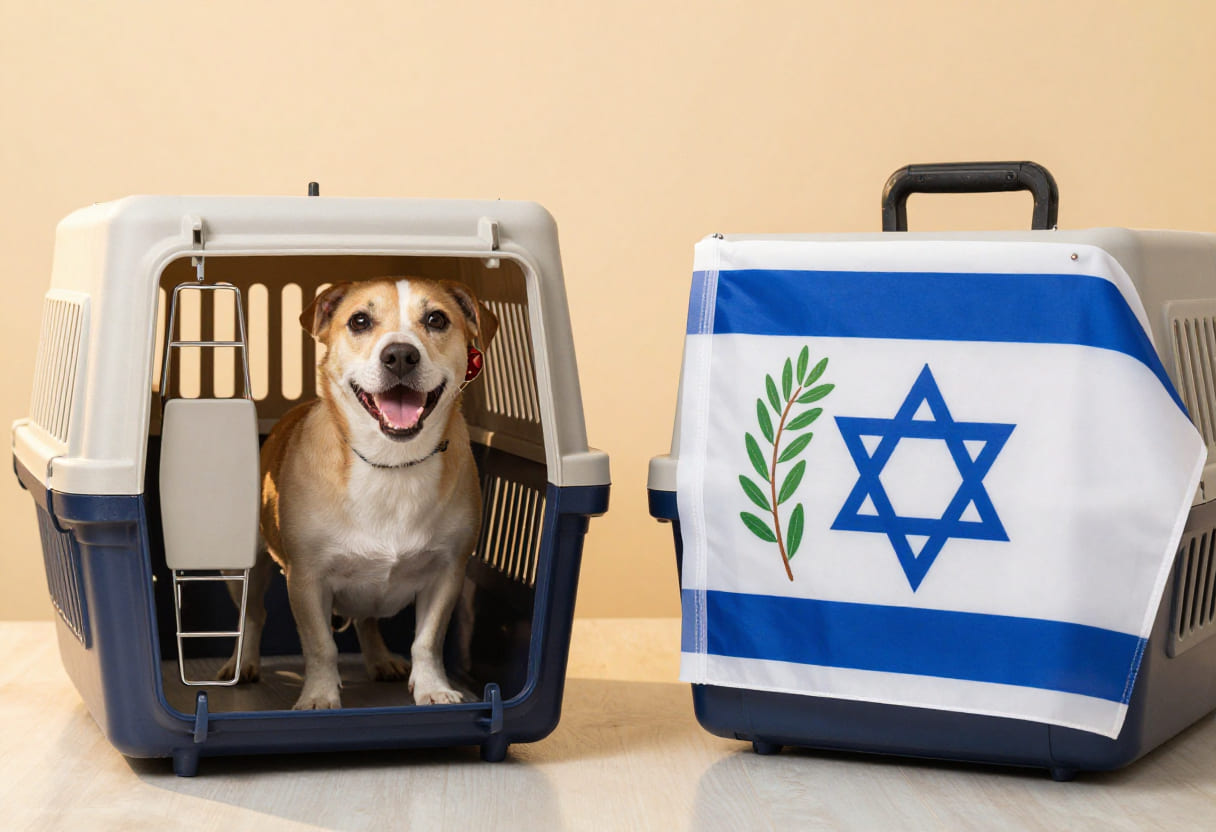
Every Pet Travels Differently
Different destinations, different routes, different challenges.
No two pet relocations follow the same path. Your departure city, your pet’s vaccination history, and the titre test timeline all shape the plan. We customize every detail to fit your situation.
Destination-Focused Planning
Israel requires a country-specific health certificate that Canadian pet owners obtain from their local CFIA (Canadian Food Inspection Agency) office. This form is not published online, which makes it harder to find than most destination certificates. We confirm the current form version and CFIA process before anything else, so you are not scrambling to locate the right paperwork at the last minute.
Smart Routing and Logistics
There are no direct flights from Canada to Israel. Pets departing from Toronto (YYZ), Montreal (YUL), or Vancouver (YVR) connect through a European hub like Istanbul (IST), Frankfurt (FRA), or Zurich (ZRH) before reaching Ben Gurion Airport (TLV). We evaluate each connection for transfer duration, airline live-animal handling, and seasonal cargo policies to find the route that keeps your pet comfortable.
Personalized Support
A single coordinator manages your relocation from the first call through arrival and registration in Israel. They track titre test results, CFIA appointment scheduling, pre-notification deadlines, and airline booking windows so nothing falls through the cracks.
Pet Shipping from Canada to Israel
Moving a pet from Canada to Israel follows Israel’s own import framework, which is separate from both the EU and US systems. There is no quarantine for pets that arrive with complete, valid documentation. The core requirements are an ISO microchip, a current rabies vaccination (inactivated or recombinant only), a passing rabies titre test from a WOAH-approved lab, an Israel-specific health certificate endorsed by the CFIA, and pre-notification to the airport veterinary service at Ben Gurion.
For a broader overview of international pet shipping, our general guide covers the process from start to finish. If you are bringing a pet into Canada from abroad, our Canada import guide covers those requirements.
We manage the entire relocation for you. That includes:
- Obtaining the Israel-specific health certificate form from your local CFIA office and confirming the current version
- Coordinating the titre test at a WOAH-approved lab and verifying results meet the 0.5 IU/ml threshold before proceeding
- Routing your pet through the best European hub based on your departure city, season, and airline pet policies
- Filing the pre-notification (Annex B and Annex C) with Israel's airport veterinary authority on the correct timeline
 Obtaining the Israel-specific health certificate form from your local CFIA office and confirming the current version
How Pet Shipping from Canada to Israel Works
To keep everything clear, we break the process into steps:
Verify requirements and timing
We confirm what rules apply based on your pet and travel details.
Build your plan and timeline
We map out what happens when, so steps are completed in the right order.
Coordinate vet preparation
We help keep appointments and timing aligned with what’s required.
Review documents for consistency
We check the details that cause delays (microchip digits, dates, names, signatures).
Confirm crate readiness and routing
We help align crate setup and routing with airline handling expectations.
Travel and arrival processing
We guide you on travel-day handoff and what to expect on arrival.






For the most current rules, refer to these official sources:

Approved Routes and Entry into Israel
There are no direct flights from any Canadian city to Israel. Every pet shipment from Canada connects through a European or Middle Eastern hub, which means the connection city and transfer handling are critical parts of the routing decision.
- From Toronto (YYZ), the most common connections are through Istanbul (IST) on Turkish Airlines, Frankfurt (FRA) on Lufthansa, or Zurich (ZRH) on Swiss. Each hub has different live-animal transfer procedures and layover durations. Turkish Airlines has been one of the more accommodating carriers for pets on routes to Israel.
- From Montreal (YUL), routing options are similar to Toronto, with the addition of direct service to Paris (CDG) on Air France, which can connect onward to TLV. Availability for live-animal cargo varies by season and aircraft type.
- From Vancouver (YVR), total transit time is longer. Routing typically goes through Frankfurt or Istanbul, adding several hours compared to East Coast departures. Summer cargo restrictions apply to many European hub connections, narrowing options further between May and September.
Entry Requirements and Documentation for Israel
Import Eligibility for Pets
Israel does not quarantine pets that arrive with complete, correct documentation. Animals that fail inspection may be returned to Canada, placed in quarantine at the owner’s expense, or in serious cases, euthanized. The stakes are real, and every detail matters.
A rabies titre test is mandatory for all dogs and cats. The test must be a FAVN (Fluorescent Antibody Virus Neutralization) or RFFIT performed at a WOAH-approved laboratory. Blood must be drawn at least 30 days after rabies vaccination, and the result must reach 0.5 IU/ml or higher. There is no 90-day waiting period after the titre results (unlike the EU rule for unlisted countries). The titre stays valid for life as long as rabies vaccinations remain current with no lapse.
Nine dog breeds are restricted from entering Israel: Pit Bull Terrier, American Staffordshire Terrier, Staffordshire Bull Terrier, Bull Terrier, Rottweiler, Dogo Argentino, Japanese Tosa, Fila Brasileiro, and American Bully. Bengal cats are restricted, and Savannah cats must be F5 generation or later. Restricted breeds may still qualify for import with a special permit, but the owner must demonstrate 18 months of continuous ownership and meet additional conditions.
Pets must be at least four months old. The owner must have owned the pet for a minimum of 90 days, declared through Annex C. Up to two pets may enter without an import permit when accompanied by the owner and all health requirements are met. Three or more pets, unaccompanied cargo shipments, ownership under 90 days, or restricted breeds require a formal import permit from the Ministry of Agriculture (contact: vs-ie@moag.gov.il).
Before scheduling vet steps or flights, we confirm what rules apply to your pet and whether breed restrictions or the import permit requirement affects your plan. Request a quote to get a plan built around your travel date.
Health Preparation and Documentation
Israel requires its own country-specific health certificate. In Canada, this form is obtained from your local CFIA office. It is not published on the CFIA website and is not available for download, so you or your coordinator must request it directly. This is one of the steps that catches Canadian pet owners off guard because most destination certificates are readily available online.
The rabies vaccination must be inactivated or recombinant only (modified live vaccines are not accepted). Israel considers all rabies vaccines to be one-year vaccines regardless of the manufacturer’s labelled duration, so the vaccination must fall within one year of the arrival date. The ISO microchip must be implanted before or on the same day as the rabies vaccination.
Before departure, you must submit a pre-notification to the Israeli airport veterinary authority. This includes Annex B (arrival notification) and Annex C (ownership declaration for the 90-day rule), sent by email to vs-airport@moag.gov.il. The notification must arrive at least two Israeli business days before the pet’s flight. Israeli business days are Sunday through Thursday, so plan the submission accordingly. If your pet arrives on a Sunday, the notification must be received by the previous Wednesday.
| Requirement | Israel, from Canada |
|---|---|
| Microchip | ISO microchip |
| Rabies vaccination | Must be an inactivated or recombinant vaccine. Modified live vaccines are not accepted |
| Rabies titre | 0.5 IU/ml or higher, at a WOAH approved laboratory, at least 30 days after vaccination |
| Health certificate | Israel has its own country specific form. In Canada it comes from your local CFIA office, not the CFIA website, so it has to be requested directly |
| Ownership | A 90 day ownership rule applies |
| Breed restrictions | Nine dog breeds are restricted |
| Pre-notification | Airport veterinary authorities have to be notified before your pet arrives |
| Quarantine | None when the paperwork is complete and correct |
Planning Timeline for Pet Shipping to Israel
Begin four to six months before your move date. The titre test controls the schedule: your pet needs a current rabies vaccination, then a 30-day wait before the blood draw, then three to six weeks of lab processing. After the titre clears, the final steps (obtaining the CFIA certificate form, vet examination, CFIA endorsement, pre-notification filing) fit into the last 10 days. If you need an import permit, apply through the Ministry of Agriculture well ahead of this window because processing times are unpredictable. Also factor in CFIA appointment availability, which varies by region and season.
Also comparing Turkey or Egypt? Each has its own Canadian route page: Turkey and Egypt.
How much does it cost to relocate a pet from Canada to Israel?
The cost of a move depends on several things: your pet’s size and weight, which set the crate and cargo price, the airline and departure city, veterinary fees for the health certificate and any required tests, government endorsement and permit fees, and how much of the process you would like us to coordinate. Because those pieces change from one pet and route to the next, we quote the full journey up front, including government fees, so there are no surprises later. Tell us your pet and your destination and we will send a clear plan and a price.
What is the CFIA process for pet travel to Israel?
The CFIA process for Israel differs from most destinations because the health certificate form is not available online. You request the Israel-specific form from your local CFIA office, then have your licensed veterinarian complete the health examination and fill out the certificate. Once completed, you bring the certificate to a CFIA office for endorsement. The CFIA inspector verifies that the paperwork meets Israel’s import requirements. You will also need your pet’s rabies vaccination certificate, titre test lab report, and proof of microchip implantation.
Does Israel have breed restrictions for dogs from Canada?
Yes. Israel’s breed restrictions apply regardless of the country of origin. Nine dog breeds are restricted: Pit Bull Terrier, American Staffordshire Terrier, Staffordshire Bull Terrier, Bull Terrier, Rottweiler, Dogo Argentino, Japanese Tosa, Fila Brasileiro, and American Bully. Bengal cats are also restricted, and Savannah cats must be generation F5 or later. Owners of restricted breeds can apply for a special import permit, but they must show 18 months of continuous ownership and meet additional conditions set by the Ministry of Agriculture.
What is the pre-notification requirement for pets entering Israel?
Before your pet’s departure, you must email two documents to Israel’s airport veterinary authority at vs-airport@moag.gov.il. Annex B is the arrival notification form, which includes your flight details and pet information. Annex C is the ownership declaration, confirming you have owned the pet for at least 90 days. Both must be received at least two Israeli business days before arrival. Israeli business days run Sunday through Thursday. For example, if your pet arrives on a Monday, the notification must be received by the previous Thursday at the latest. We handle this filing as part of the relocation plan so the timing is correct.
How does Pet Travel Advisors handle a Canada to Israel relocation?
We manage every step from initial planning through arrival at Ben Gurion Airport. That includes obtaining the Israel-specific certificate form from the CFIA, scheduling the titre test at the right point in your pet’s vaccination timeline, and coordinating your vet visit with the blue-ink and form requirements. It also covers booking the CFIA endorsement appointment, selecting the best connecting route through a European hub, filing the pre-notification on the correct timeline, and preparing you for the arrival inspection. One coordinator handles your file from start to finish. Request a quote to start planning your move.