
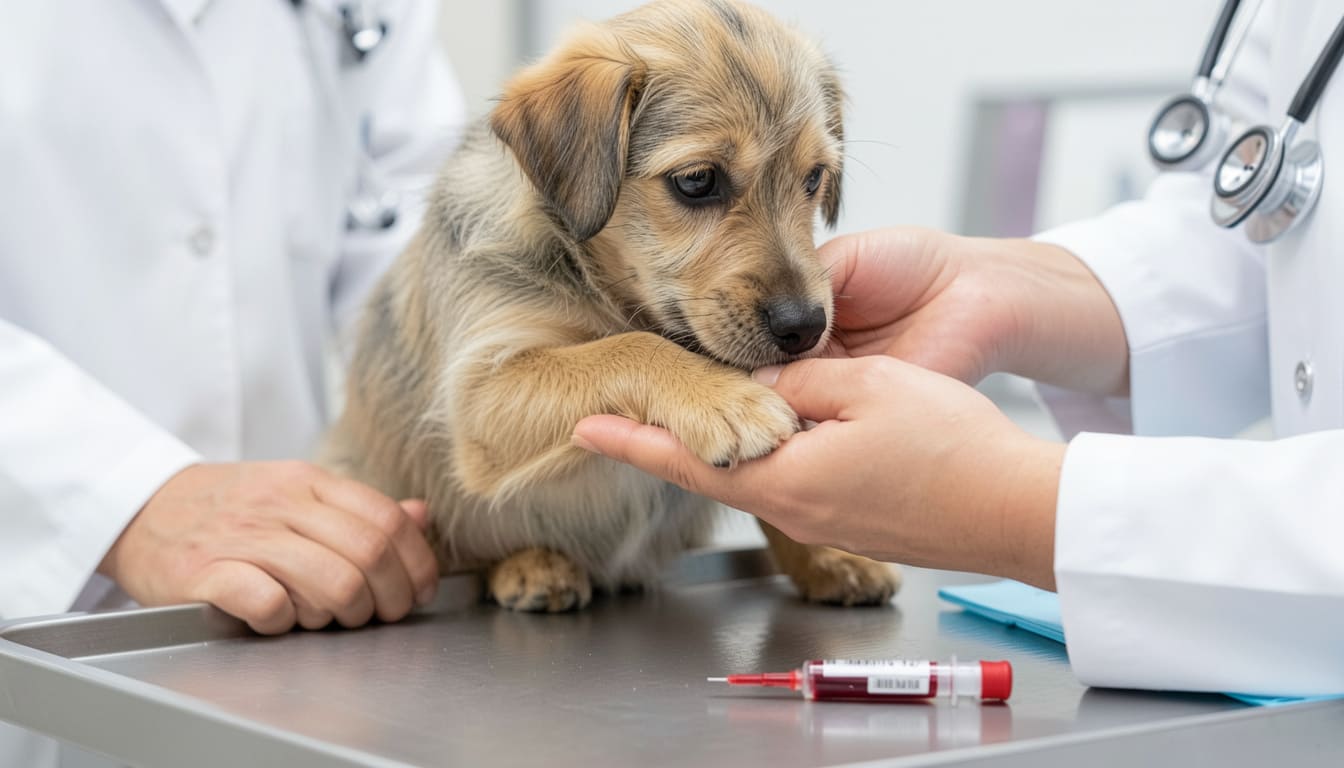
What a rabies titer test measures and why it matters
A rabies titer test is a blood test that measures the level of rabies antibodies in your pet’s bloodstream. It does not test for the rabies virus itself. Instead, it confirms that your pet’s rabies vaccination produced an adequate immune response.
Many countries use this test as proof that your pet is properly protected against rabies before allowing entry. For Canadian pet owners shipping their animals internationally, understanding when this test is required, where to get it done, and how it fits into the travel timeline can save months of delays.
Which countries require a titer test
Not every destination requires one. Here are the main categories:
Countries that always require a titer test from Canadian pets include Japan, Australia, Singapore, Malaysia, Taiwan, and the UAE. These countries require the titer test regardless of where your pet is coming from.
EU countries generally accept pets from Canada without a titer test, provided your pet has a current rabies vaccination and a valid CFIA health certificate. However, if your pet’s vaccination has lapsed or if you cannot prove continuous vaccination coverage, an EU country may require a titer test.
The United Kingdom does not require a titer test for pets arriving directly from Canada, but does require one for pets arriving from certain other countries. If your pet has been in a non-listed country recently, the requirement may apply.
The United States does not require a titer test for dogs entering from Canada, though the 2024 CDC rule changes added other documentation requirements.
How the test works
Your veterinarian draws a blood sample and sends it to an approved laboratory. The lab runs a Fluorescent Antibody Virus Neutralization (FAVN) test to measure the antibody level. A result of 0.5 IU/mL or higher is the internationally accepted passing threshold.
The blood draw must happen at least 30 days after the most recent rabies vaccination. If the blood is drawn too soon, the antibody levels may not have peaked yet, risking a failed result.
Approved laboratories for Canadian pets
The sample must be processed at a laboratory approved by the destination country’s government. For most destinations, the lab must be on the OIE (World Organisation for Animal Health) approved list. From Canada, samples are commonly sent to:
- Kansas State University Rabies Laboratory (USA), widely accepted by most destination countries
- The AHVLA Weybridge laboratory (UK): accepted by EU and UK destinations
- Other nationally accredited labs depending on the specific destination
Your vet may need to coordinate shipping the sample on dry ice with overnight courier service. This adds to the cost but ensures the sample arrives in testable condition.
Timeline: when to get the test
This is where the timing gets tricky. The timing requirements are strict and vary by destination:
Japan requires the titer test result at least 180 days before your pet enters the country. That means the blood draw happens at least 7 months before travel (30 days post-vaccination wait, plus 180-day wait after a successful result, plus lab processing time).
Australia requires the titer test at least 180 days before export. The entire preparation timeline for Australia is 6 to 8 months minimum.
Singapore requires a valid titer test but with a shorter wait period. Check the specific requirements at the time of your move, as they update periodically.
Lab processing time is typically 2 to 4 weeks from when the sample arrives. During peak season (spring and summer), processing can take longer.
If your pet fails the test (antibody level below 0.5 IU/mL), they will need a booster vaccination and a retest. This adds another 30 days minimum to the timeline.
Cost
The total cost for a rabies titer test in Canada typically breaks down as follows:
- Blood draw at your vet: $30 to $75 CAD
- Lab processing fee (FAVN test): $150 to $275 CAD depending on the lab
- Sample shipping (overnight courier with dry ice): $50 to $100 CAD
- Total: roughly $230 to $450 CAD
If your pet needs a rabies booster before the blood draw, add the cost of the vaccination ($25 to $75 CAD at most clinics).
What happens if the test expires
Once your pet passes a titer test, the result is valid as long as their rabies vaccination remains current. If the rabies vaccination lapses, the titer result is no longer valid, and you will need a new vaccination, a new 30-day wait, and a new blood draw.
This is critical for countries with 180-day wait periods. If your pet’s rabies vaccination expires during the waiting period, the clock resets to zero. Keep your pet’s rabies vaccination current well before starting the titer test process.
How we coordinate the titer test timeline
Ready to start planning your pet’s move?
Request a quote and we will put together a detailed plan and price for your specific route.
Prefer to talk? Give us a call at 1-877-707-1739.
Frequently asked questions
Can I get the blood drawn at any veterinary clinic in Canada?
Yes, any licensed Canadian veterinarian can draw the blood sample. The key is that the sample must be sent to a lab approved by your destination country. Your vet may need guidance on sample handling and shipping requirements.
Does my pet need to be sedated for the blood draw?
No. A rabies titer test requires a small blood sample, similar to a routine blood panel. Most pets tolerate it without sedation.
What if we need to travel before the 180-day waiting period is up?
You cannot shorten the waiting period. If your travel date is fixed and the 180-day window does not close in time, you will need to either delay your pet’s travel or explore interim arrangements where your pet stays with family, a friend, or a boarding facility until the waiting period ends.
Do cats need a titer test too?
It depends on the destination. Australia, Japan, and Singapore require titer tests for cats as well as dogs. The test, process, and timeline are identical.