
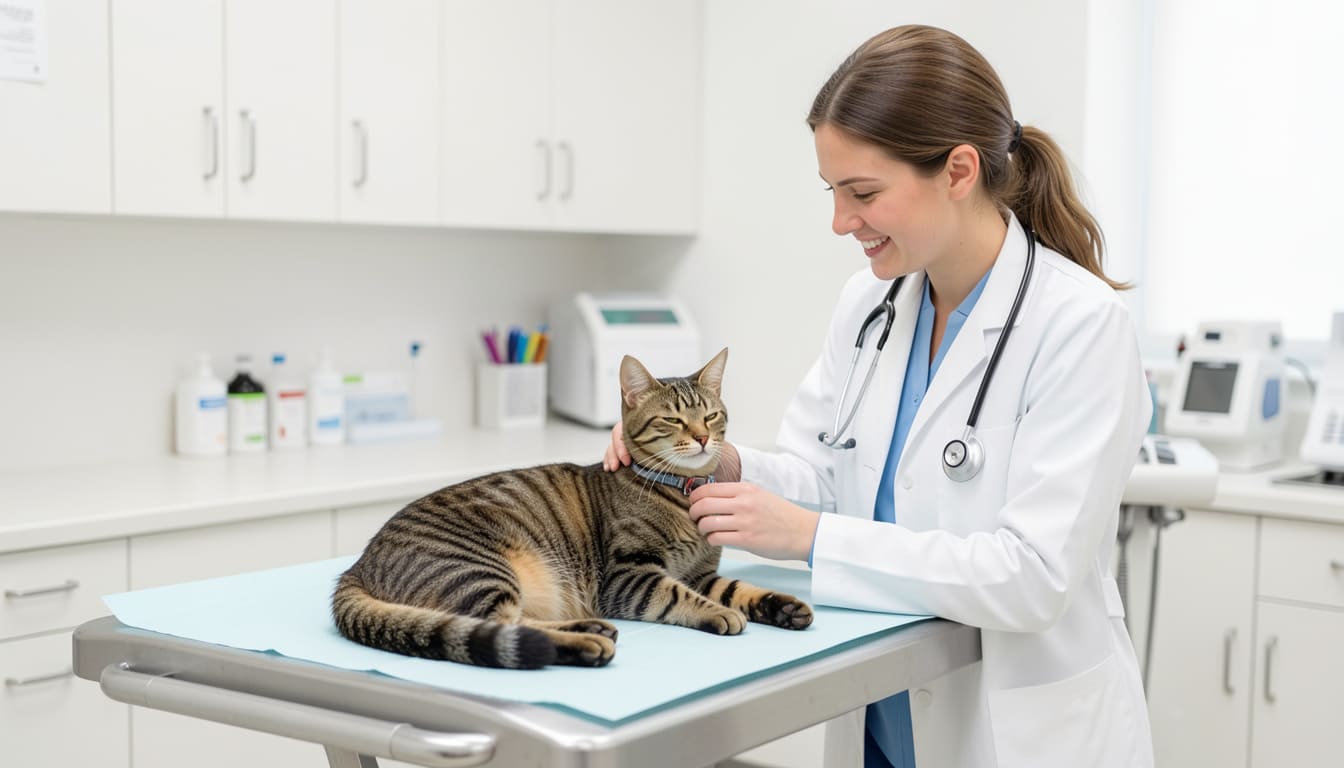
Why your pet needs a CFIA health certificate
If you are shipping your pet internationally from Canada, almost every destination country requires an official health certificate. In Canada, that means a document inspected and endorsed by the Canadian Food Inspection Agency (CFIA). Without this endorsement, your pet will not clear customs at the other end.
The CFIA health certificate confirms that a licensed Canadian veterinarian has examined your pet, that they are healthy and fit to travel, and that they meet the import requirements of the destination country. Here is what the process involves, how long it takes, and what it costs.
The difference between a vet certificate and CFIA endorsement
These are two separate steps that people often confuse:
Your veterinarian conducts the physical exam and fills out the health certificate form. This is a clinical document confirming your pet’s health, vaccination status, microchip number, and any treatments the destination country requires.
The CFIA then reviews and endorses that certificate. The endorsement is the government stamp that gives the document legal standing for international travel. Most destination countries will not accept a health certificate without this government-level endorsement.
Which form do you need
The form depends entirely on where your pet is going. The CFIA maintains country-specific health certificate templates for most destinations. Some key points:
For travel to the United States, the requirements changed in 2024. Dogs now need the CDC Dog Import Form in addition to a standard veterinary certificate. The CFIA endorsement may still be required depending on the airline and route.
For travel to EU countries, the certificate must follow EU format requirements and include microchip details, rabies vaccination dates, and any required rabies titer test results.
For travel to Australia, Japan, or other countries with complex import rules, the CFIA has specific bilateral certificate forms. Using the wrong form results in rejection.
Your veterinarian should confirm which form applies to your destination. If they are unfamiliar with the destination’s requirements, a pet relocation specialist can provide the correct form and instructions.
Timeline: when to start
The timing is strict, and working backwards from your travel date is the only reliable approach:
Most health certificates are valid for 10 days from the date of the veterinary exam. Some countries allow longer validity, but 10 days is the common standard. That means your vet visit must happen within 10 days of departure.
After your vet completes the certificate, it goes to the CFIA for endorsement. CFIA processing can take 2 to 5 business days depending on the district office and time of year. Peak travel season (summer and December holidays) means longer waits.
Working backwards: if your pet flies on a Friday, the CFIA needs the certificate by Monday or Tuesday of that week at the latest. Your vet visit should happen the Thursday or Friday before that, depending on your CFIA office’s turnaround time.
For destinations with complex requirements (titer tests, import permits, multi-step treatments), start the process months ahead. The health certificate itself is the final step, but the prerequisite steps can take 3 to 8 months.
Cost breakdown
The costs stack up from several sources:
Veterinary exam and certificate completion: $75 to $200 CAD, depending on your clinic and the complexity of the destination’s form. Some clinics charge extra for international health certificates because they require more time and documentation than a standard checkup.
CFIA endorsement fee: the CFIA charges a fee per certificate. As of 2026, this is typically $20 to $40 CAD, significantly less than the USDA endorsement fee in the United States ($38 USD per certificate).
Rabies titer test (if required): $200 to $350 CAD. This is a separate blood test that some destinations require. It must be done at a CFIA-approved laboratory, and results can take 2 to 4 weeks.
Additional vaccinations or treatments: some destinations require specific treatments (tapeworm, tick, internal/external parasite) that your pet may not have had. Cost varies by treatment.
Total for a straightforward international move: $150 to $300 CAD for the certificate and endorsement. For destinations requiring titer tests and additional treatments: $400 to $700 CAD.
What delays travel most often
These are the issues that come up most often when pet owners handle the certificate process themselves:
Wrong form. Each country has its own template. Using a generic veterinary certificate when the destination requires a bilateral form means starting over.
Expired certificate. If your travel gets delayed by even a day past the validity window, you need a new exam and a new endorsement. Build a buffer into your timeline.
Missing microchip scan on the form. The microchip number must be recorded on the health certificate and must match the number in your pet’s vaccination records. Mismatches cause delays at customs.
Incomplete treatment records. If the destination requires proof of a treatment administered on a specific date (like the UK’s tapeworm treatment 24 to 120 hours before arrival), that date and treatment must appear on the certificate.
CFIA office hours and closures. CFIA district offices are not open on weekends or statutory holidays. If your vet visit falls on a Thursday before a long weekend, you may not get the endorsement in time.
How we help with the CFIA process
Ready to start planning your pet’s move?
Request a quote and we will put together a detailed plan and price for your specific route.
Prefer to talk? Give us a call at 1-877-707-1739.
Frequently asked questions
Can my regular vet do an international health certificate?
Any licensed Canadian veterinarian can complete the clinical exam and fill out the form. However, not all vets are familiar with the specific requirements for every destination. If your vet has not done international health certificates before, they may need extra time, or you may want to ask for a referral to a vet who handles them regularly.
Do I need a separate certificate for each pet?
Yes. Each animal requires its own health certificate and CFIA endorsement. If you are shipping two dogs, that is two exams, two certificates, and two endorsement fees.
What if my flight gets cancelled after the certificate is issued?
If you can rebook within the certificate’s validity period, the existing certificate is still valid. If the delay pushes you past the validity window, you will need a new exam and new endorsement. This is one reason to build at least 2 to 3 days of buffer into your travel timeline.
Is the CFIA endorsement the same as a pet passport?
No. Pet passports are used within the EU for travel between member states. Canada does not issue pet passports. The CFIA-endorsed health certificate serves a similar function for pets leaving Canada, but the format and legal framework are different.