
Bringing Your Pet to Canada
Bringing a pet into Canada is simpler than entering most countries: no quarantine, no import permit for personal dogs and cats, and no titre test. What Canada does demand is exact paperwork, a valid rabies vaccination certificate in English or French, signed by a licensed veterinarian, checked at the border or airport.
One coordinator manages the journey into Canada: the documents, the airline, the crate, and the routing into a Canadian gateway, then to your door.
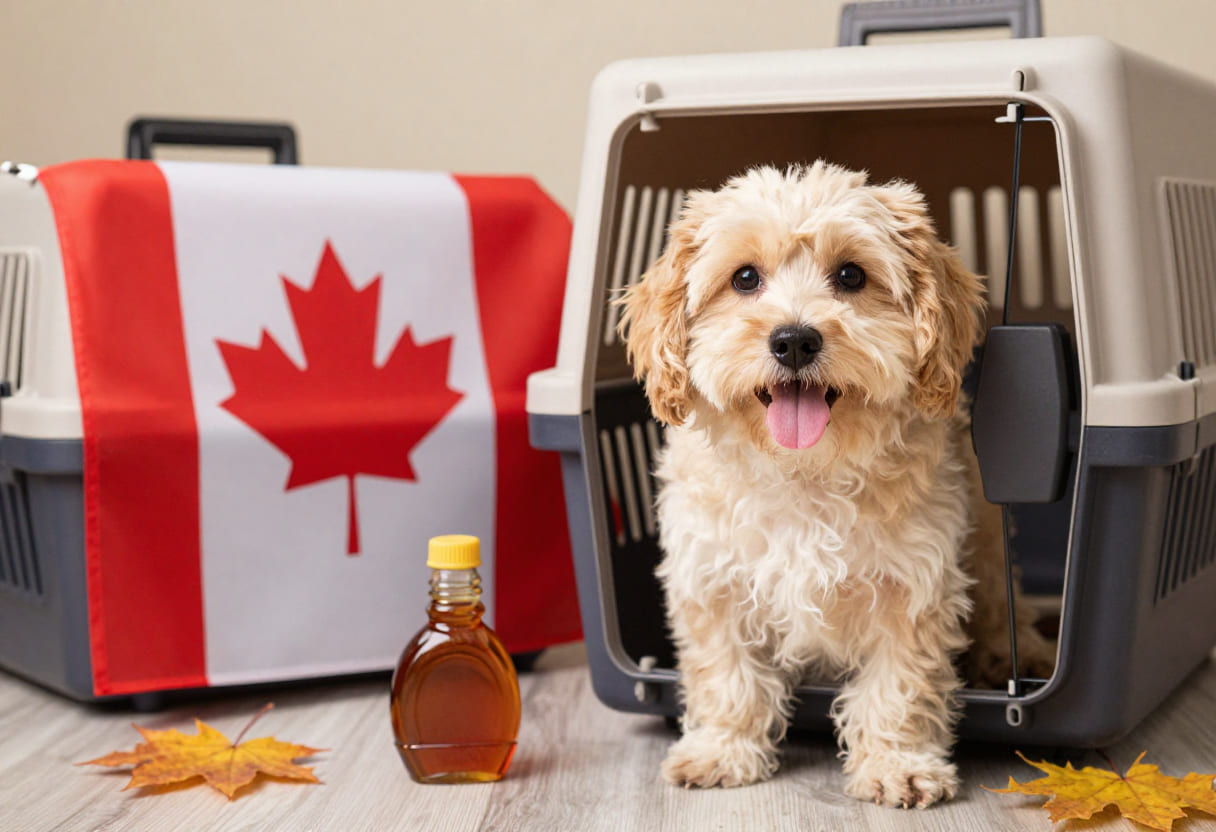
Every Pet Travels Differently
Different destinations, different routes, different challenges.
Because timelines, airline rules, and Canada’s entry requirements all affect each other, we build a plan that fits your pet and your move date.
Destination-Focused Planning
We use Canada's official CFIA import rules as the baseline, then turn them into a simple checklist you can follow.
Smart Routing and Logistics
We help choose practical routes, travel windows, and handoff procedures so your pet’s trip is safer and more predictable.
Personalized Support
Pet Travel Advisors assigns a move coordinator who keeps you updated and checks details before travel so nothing important is missed.
Bringing Your Pet to Canada
The rules branch by age and origin: dogs and cats 3 months and older need a valid rabies vaccination certificate, and puppies under 8 months follow a dog specific path where age and rabies status both matter. Here is what we lock in for every move into Canada:
- confirm what applies to your pet and route
- map out a realistic timeline
- coordinate vet steps and paperwork
- support crate readiness and routing
 confirm what applies to your pet and route
How Bringing Your Pet to Canada Works
To keep everything clear, we break the process into steps:
Verify requirements and timing
We confirm what rules apply based on your pet and travel details.
Build your plan and timeline
We map out what happens when, so steps are completed in the right order.
Coordinate vet preparation
We help keep appointments and timing aligned with what’s required.
Review documents for consistency
We check the details that cause delays (microchip digits, dates, names, signatures).
Confirm crate readiness and routing
We help align crate setup and routing with airline handling expectations.
Travel and arrival processing
We guide you on travel-day handoff and what to expect on arrival.






We keep your checklist aligned with the official rules. For the US export side, we follow the USDA APHIS guidance for US to Canada travel. For the Canada entry rules, we follow the Canadian Food Inspection Agency guidance on importing animals.

Approved Routes and Entry into Canada
Pets arrive through Toronto Pearson, Vancouver, Montreal Trudeau, or Calgary, by air cargo or accompanied, and we complete the journey by road to any Canadian city. At arrival, documents are declared to the Canada Border Services Agency and checked on the spot, so the file has to be right the first time.
- routing options can change based on airline availability and season
- we confirm the best practical route before booking
- we make sure your plan matches what’s expected at intake
Entry Requirements and Documentation for Canada
Import Eligibility for Pets
There is no quarantine for personal pets arriving in Canada with correct documents. The rabies certificate must be in English or French, identify your pet, and be signed by a licensed veterinarian. A mismatch can mean re vaccination orders or refused entry, which is exactly what our document check prevents.
Before booking anything, we confirm what applies to your pet directly against the CFIA import reference rules, so nothing in your plan is based on outdated summaries.
Health Preparation and Documentation
For dogs and cats 3 months and older: a valid rabies vaccination certificate in English or French from a licensed veterinarian. For young puppies and kittens, proof of age matters because the requirements branch below 3 months and below 8 months. Assistance dogs follow their own path. We build the exact document set for your pet, origin country, and route.
| Requirement | Canada, for a pet arriving from abroad |
|---|---|
| Dogs and cats 3 months and older | A valid rabies vaccination certificate in English or French, from a licensed veterinarian |
| Puppies and kittens under 3 months | Proof of age. The requirements branch below 3 months and again below 8 months |
| Assistance dogs | Follow their own path |
| Microchip | Not required by Canada |
| Import permit | None for a personal pet |
| Quarantine | None |
Planning Timeline for Pet Shipping to Canada
From the United States, a move into Canada can happen in as little as 1 to 2 weeks when the rabies vaccination is current. From further abroad, plan 3 to 6 weeks depending on origin country rules and routing. Winter weather windows shape timing more than paperwork does.
For a line by line breakdown of what this costs, see our cost page for bringing a pet to Canada.
Is there quarantine for pets arriving in Canada?
No. Personal dogs and cats with correct documents enter without quarantine. The border officer checks the rabies certificate at arrival, and that check is the whole game.
What documents does my pet need to enter Canada?
A valid rabies vaccination certificate in English or French, issued and signed by a licensed veterinarian, for any dog or cat 3 months and older. Young animals need proof of age instead. We prepare and verify the exact set for your route.
Which airports can my pet arrive through?
Toronto Pearson, Vancouver, Montreal Trudeau, and Calgary handle most arrivals, and we complete the journey by road to any Canadian city, including smaller centres.
Can I bring a puppy or kitten to Canada?
Yes. Requirements branch by age: under 3 months, and dogs under 8 months travelling to their owner, follow specific paths where proof of age and rabies status matter. We confirm the right path before you book anything.
How much does it cost to bring a pet to Canada?
Every quote is built for your pet and route. The main components are the airline, the crate, arrival clearance, and door to door ground service. Request a quote and we price the full journey up front.
How does Pet Travel Advisors handle a move to Canada?
One coordinator owns your file: document verification against CFIA rules, flight booking, crate sizing, border declaration prep, and delivery to your door anywhere in Canada.