
Pet Travel Checklist for Canadians: Everything You Need Before Moving Day
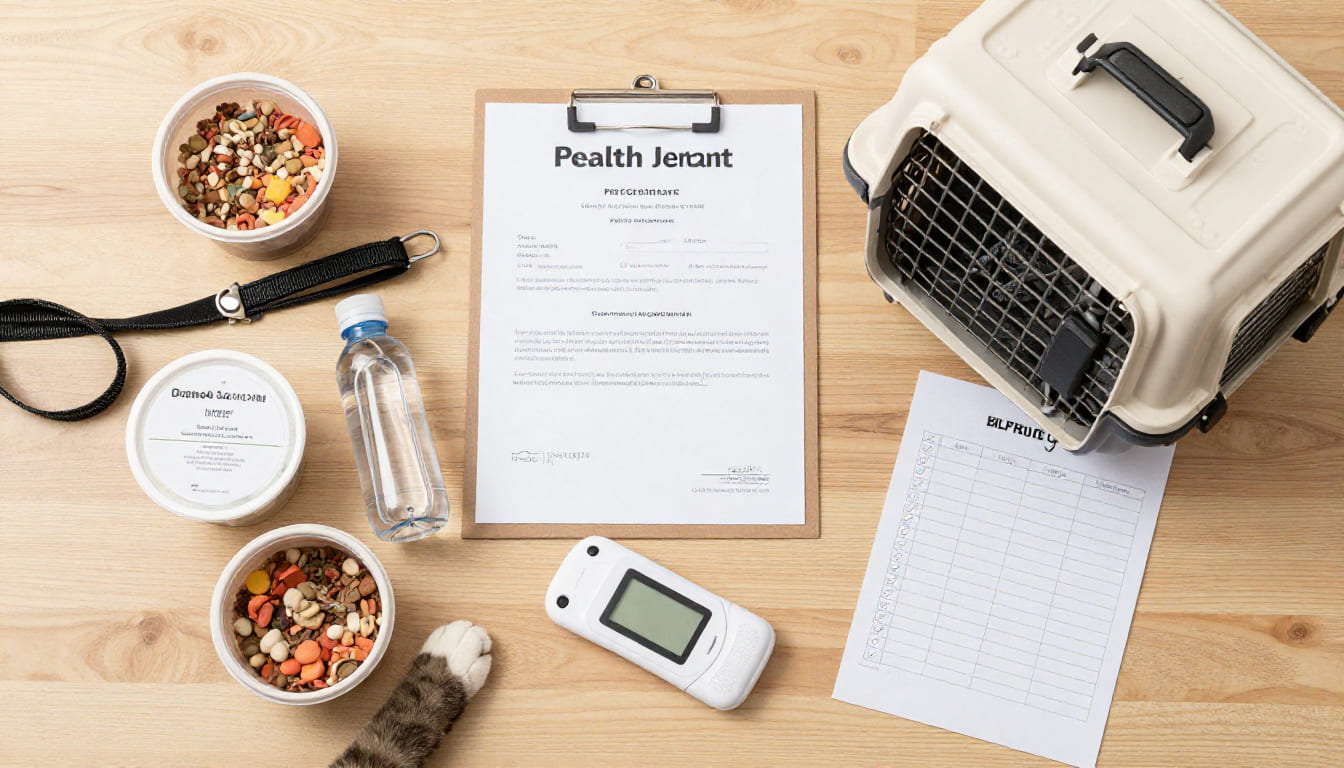
Your complete checklist for moving a pet from Canada
Moving your pet internationally from Canada involves a chain of tasks with specific timing requirements. Miss one step or get the timing wrong, and your pet’s travel date gets pushed back. This checklist puts every task in order, with the timeline built around your departure date.
Print this page, save it, or bookmark it. Check items off as you go.
6 to 8 months before travel
These early steps only apply if your destination requires a rabies titre test (Japan, Australia, Singapore, UAE, and some others).
- Confirm your pet’s microchip is registered and working. Have your vet scan it at your next visit. The microchip number must match all documentation going forward.
- Ensure your pet’s rabies vaccination is current. The titre test blood draw must happen at least 30 days after the most recent rabies vaccination.
- Schedule the titre test blood draw with your vet. The sample goes to an approved laboratory (Kansas State University or another OIE-listed lab).
- Wait for results (2 to 4 weeks). Your pet needs a result of 0.5 IU/mL or higher. If the result is below threshold, your pet needs a booster and retest.
- Start the waiting period. For Japan and Australia, the 180-day wait begins from the date of a successful blood draw.
3 to 4 months before travel
- Research your destination’s specific import requirements. Every country has its own rules. The CFIA website lists requirements by country, or contact us for a destination-specific breakdown.
- Apply for an import permit if your destination requires one. Processing times vary from a few days (UK) to several weeks (Australia, Singapore). Do not wait on this.
- Check airline options and pet cargo availability for your target travel dates. If you are shipping during winter, identify backup departure airports with milder temperatures.
- If your pet is a restricted breed, research which airlines will accept them and on which routes.
- Order an IATA-compliant travel crate if you do not already have one. Size it correctly: your pet must be able to stand up, turn around, and lie down comfortably.
6 to 8 weeks before travel
- Book the airline cargo space or confirm your in-cabin pet reservation. Cargo space for live animals is limited and fills up during peak season.
- Begin crate training. Leave the crate open in your home with treats and a familiar blanket inside. Let your pet go in and out on their own. Gradually increase the time they spend inside with the door closed.
- Schedule any destination-required treatments. Some countries require internal and external parasite treatments within specific windows before travel. The UK requires tapeworm treatment 24 to 120 hours before entry.
- Confirm quarantine arrangements if applicable (Australia requires advance quarantine booking at Mickleham).
- If your pet takes medication, get a sufficient supply for the travel period plus 2 weeks. Carry a copy of the prescription.
2 to 3 weeks before travel
- Obtain the correct health certificate form for your destination. The CFIA has country-specific templates. Using the wrong form means starting over.
- Provide the form to your veterinarian with clear instructions on what needs to be completed.
- Schedule the veterinary exam within the health certificate validity window (typically 10 days before departure). Work backwards from your travel date to pick the right day.
- Confirm your CFIA district office’s processing time for endorsement. Allow 2 to 5 business days. Account for weekends and statutory holidays.
10 days before travel
- Take your pet to the veterinary exam. The vet will examine your pet, confirm they are healthy and fit to travel, record the microchip number, verify vaccination records, and complete the health certificate form.
- Administer any timed treatments required by the destination (tapeworm, tick treatment, etc.). Record the exact date and time on the health certificate.
- Submit the completed health certificate to the CFIA for endorsement immediately after the vet visit. Every day of processing time counts against the certificate’s validity window.
3 to 5 days before travel
- Pick up the CFIA-endorsed health certificate.
- Review the endorsed certificate for accuracy. Check: pet name, microchip number, vaccination dates, treatment dates, destination country, and endorsement stamp. Any error means a correction and possible re-submission.
- Prepare the travel crate. Attach “Live Animal” stickers on all four sides and the top. Attach feeding and watering instructions. Secure the water dish (fill with ice cubes at departure so it does not spill during handling). Place absorbent bedding and a familiar blanket or toy inside.
- Organize all documents in a clear plastic sleeve attached to the top of the crate: health certificate, vaccination records, import permit (if applicable), and your contact information at the destination.
The day before travel
- Confirm the flight status and check weather conditions at the departure airport. If cargo, check the temperature forecast for loading time.
- Feed your pet a normal meal no less than 4 hours before departure. Some airlines recommend no food 4 to 6 hours before flight time to reduce nausea.
- Exercise your pet well. A tired pet is generally a calmer traveller.
- Settle the sedation question with your vet weeks ahead, never on travel day. Both Canadian carriers discourage it and they set different conditions, which our sedation guide sets out.
Travel day
- For cargo: arrive at the airport cargo facility 3 to 4 hours before the flight. The airline needs time to process the live animal shipment, inspect the crate, and verify documents.
- For in-cabin: arrive at the passenger terminal with enough time for check-in. Keep your pet in the carrier at all times inside the terminal.
- Offer water before check-in. Your pet will have access to the water dish in the crate during the flight.
- Hand over your pet and documents to the airline cargo team. Get a confirmation receipt with the air waybill number for tracking.
After arrival
- Track the flight and confirm landing.
- Collect your pet from the destination cargo facility (or have your destination contact do so). Bring identification and the air waybill number.
- Present all documents to customs and veterinary inspection at the destination.
- Let your pet rest, hydrate, and decompress in a quiet space. Travel is stressful, and most pets need a day or two to adjust.
Ready to start planning your pet’s move?
Request a quote and we will put together a detailed plan and price for your specific route.
Prefer to talk? Give us a call at 1-877-707-1739.
Want this as a printable list? Our free two page checklist covers every step in order, from the first vet visit to travel day, with space for your own notes.
Frequently asked questions
Can I use this checklist for domestic moves within Canada?
Domestic moves are simpler. You will not need CFIA endorsement, import permits, or titre tests. The key items for domestic: a health certificate from your vet (if crossing provincial lines), airline booking, and a properly sized crate if flying cargo.
What if my destination is not listed on the CFIA website?
For countries without a specific CFIA bilateral certificate, the CFIA can endorse a generic international health certificate. However, you should verify with the destination country’s embassy or agricultural authority what documents they will accept at the border.
How much should I budget for the entire process?
For a complete breakdown of costs, see our pet shipping cost guide. Rough ranges: domestic in-cabin $100 to $300 CAD, international cargo $3,000 to $8,000 CAD depending on destination and pet size.
Do I need a separate checklist for each pet?
Each pet needs its own health certificate, CFIA endorsement, and (if applicable) titre test and import permit. The airline booking and crate are also per-pet. If you are moving multiple animals, the timeline applies to each one individually.
Sources
Checked August 2026.
- CFIA, pets (dogs, cats and ferrets): export certificates. Most pets need an export certificate from a licensed vet, endorsed by an official CFIA veterinarian before the animal leaves Canada. Requirements are listed country by country.
- IATA, pet corner for travellers. Crate sizing by formula, advance airline confirmation, pre-flight feeding, and the case against sedation.
- CFIA, travelling with a pet. Only dogs, cats and ferrets count as pets for CFIA purposes, and destination requirements change often, so they are checked before every trip.
Last updated