
Ground Pet Transport: Options, Costs, and When Driving Makes Sense
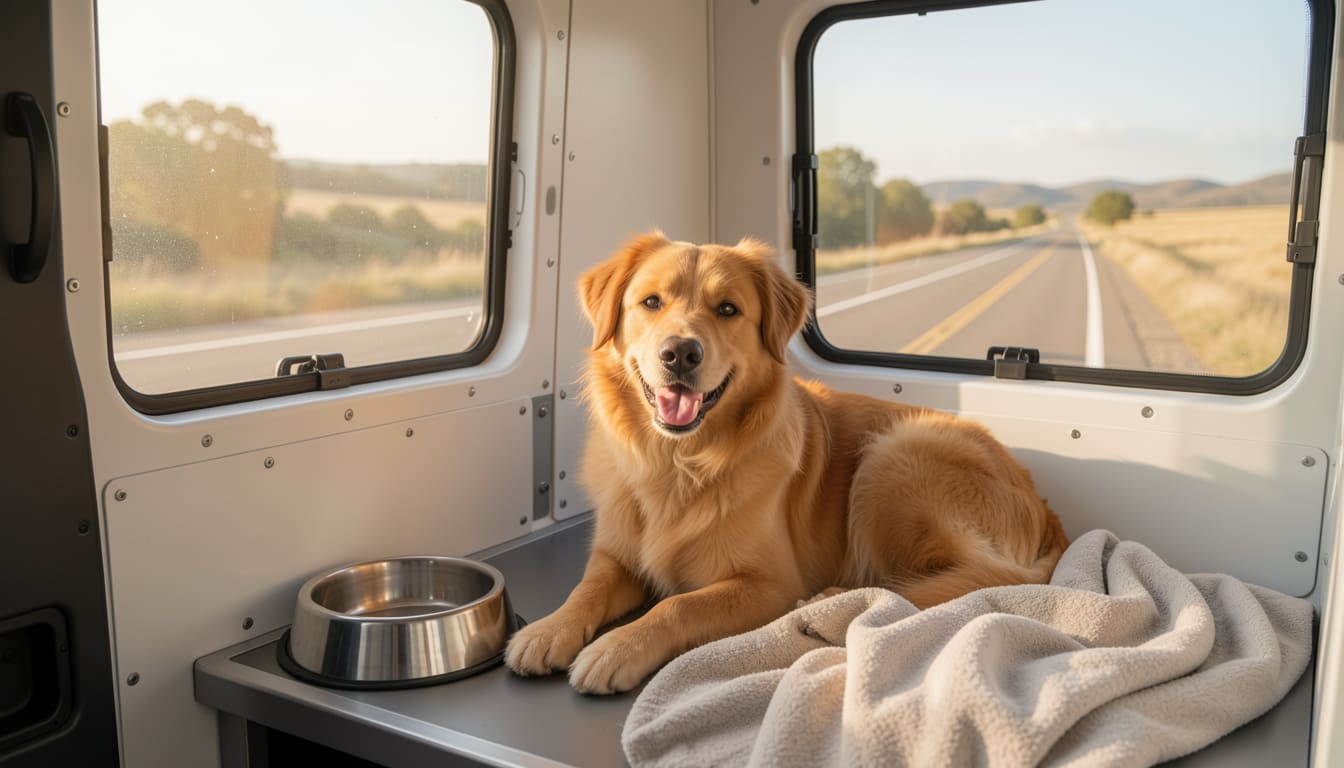
Flying is not always the answer. For shorter distances, for pets that panic in the air, and for owners who want their animal to stay on the ground the whole way, ground pet transport is often the calmer and cheaper choice. Here is when driving makes sense, what a professional ground service actually does, what it costs, and how to do the drive yourself if you go that route.
When ground transport is the right call
- The distance is drivable in a day or two rather than a full cross-continent haul.
- Your pet is a snub-nosed breed that airlines restrict from the hold.
- Your pet is anxious in the air or has a medical reason to avoid altitude.
- You would rather your pet never leave a familiar, climate-controlled vehicle.
For flat-faced breeds in particular, ground is frequently the safest option. Our guide on breed restrictions explains why airlines limit these dogs and cats.
What a professional ground service does
A ground service is more than a ride. A good one travels in a climate-controlled vehicle, keeps to a schedule you can track, stops regularly for water, walks, and bathroom breaks, and keeps you updated along the way. Your pet stays crated or secured for safety, in a space designed for animals rather than a back seat piled with boxes. It is the difference between your pet being transported and your pet being cared for.
Driving your pet yourself
If you are doing the drive on your own, a few things make it far smoother:
- Secure the crate or use a proper harness so your pet is safe if you stop short.
- Never leave a pet in a parked car in warm weather, even for a few minutes.
- Plan your stops around walks and water, roughly every three to four hours.
- Keep the first day short so everyone settles into the rhythm.
- Pack a small kit: food, a familiar toy or blanket, waste bags, medications, and vaccination records.
Our calm-journey tips and pet travel checklist are worth reading before you set off.
What ground transport costs
Ground pricing tracks distance more than anything else. A professional service commonly runs a few hundred dollars for a short regional move up to roughly 1,800 dollars for a long haul, which is often less than flying once you add airline fees, crates, and coordination. The trade-off is time, since driving is slower than a direct flight. See the full picture in our cost guide.
Ground or air? A quick way to decide
If the route is drivable in a day or two, or your pet is a snub-nosed breed, ground is usually the better call. If the distance is coast to coast, air usually wins on both time and stress, because a direct flight is hours rather than days. If you are torn, our overview of pet air transport and our full moving across Canada guide lay the two side by side.
Why ground fits Canada so well
Canadian distances are enormous, but the population lives along a single east-west corridor, which is exactly the geography ground transport is good at. Toronto to Winnipeg, Calgary to Vancouver, Montreal to Halifax: these are established routes for climate-controlled pet vans. Winter is the flip side. Airline cold-weather embargoes ground cargo on the coldest weeks, and a heated vehicle keeps moving when flights will not take a pet at all. Our winter shipping guide covers how the cold rules work.
Crossing into the US by road
Ground transport over the border is routine and often simpler than flying. A pet entering the US from Canada pays no US import fee. The CDC dog import form is filed online at no charge. For a dog that has only been in Canada or another rabies-free or low-risk country in the past six months, the CDC Dog Import Form receipt is the only required documentation. Southbound snowbirds and cross-border relocations run this way year round. For the paperwork side, see our guide to driving to the US with a pet.
Questions worth asking any ground transporter
- Is the animal area climate controlled and temperature monitored, winter and summer?
- How often are exercise and bathroom stops made, and where do pets stay overnight on multi-day routes?
- Is the run dedicated or shared, and how many other pets ride along?
- What updates do you send en route, and who do I call mid-trip?
- Can you show proof of insurance and references for this specific route?
A dedicated solo run costs more than a shared shuttle. The difference buys route directness and fewer stops before yours.
Frequently asked questions
Is ground transport cheaper than flying a pet?
Often, yes, for drivable distances, once you factor in airline fees and crates. Over very long distances, flying can win on both time and total cost.
How long can a pet safely travel by road in a day?
A good service breaks the day with regular stops for water, walks, and rest. Pets are never left in a hot vehicle, and long routes are split across days.
Can a snub-nosed breed travel by ground?
Yes. Ground transport is one of the best options for brachycephalic dogs and cats that airlines restrict from the hold.
Do you provide ground transport in my city?
We coordinate ground and air moves across the country. Check your local page, for example Toronto, Vancouver, or Winnipeg, or just request a quote.
How long does Toronto to Vancouver take by road?
It depends on whether the run is dedicated or shared. A dedicated trip drives close to straight through with planned rest stops, while a shared route adds days for other pickups. Get the planned day count and overnight arrangements in writing before you book.
Is ground transport safe in a Canadian winter?
With a professional service, yes. The vehicle is heated and monitored, and unlike air cargo it is not subject to cold-weather embargoes that stop flights entirely in the coldest weeks. Winter is the season when ground is often the only option that moves at all.
Do I need paperwork to move my pet between provinces by road?
Bring the rabies certificate and a recent health certificate from your vet. Requirements are light within Canada, but transporters and boarding stops along the way will ask to see proof of vaccination.
Related guides
Ready to plan your pet’s move?
Tell us the route and your pet, and we will tell you honestly whether ground or air fits best. Request a quote and we will reply with a plan, a timeline, and clear next steps.
Sources
Checked August 2026.
- CFIA, travelling with a pet. Only dogs, cats and ferrets count as pets for CFIA purposes, and destination requirements change often, so they are checked before every trip.
- IATA, live animal handling and transport. The Live Animals Regulations, the worldwide standard airlines work to.
- CFIA, bringing animals to Canada: importing and travelling with pets. What a pet needs at the border. The rules branch at 3 months and again at 8 months of age, and by country of origin.
Crossing into the United States by road runs on a different set of rules, and CFIA has no part in it. Our guide to driving to the United States from Canada with a pet covers the free CDC form, the microchip and age requirements, and what Canada asks for on the way home.
Last updated