
Canadian Armed Forces Pet Relocation: Moving Your Pet During a Military Posting
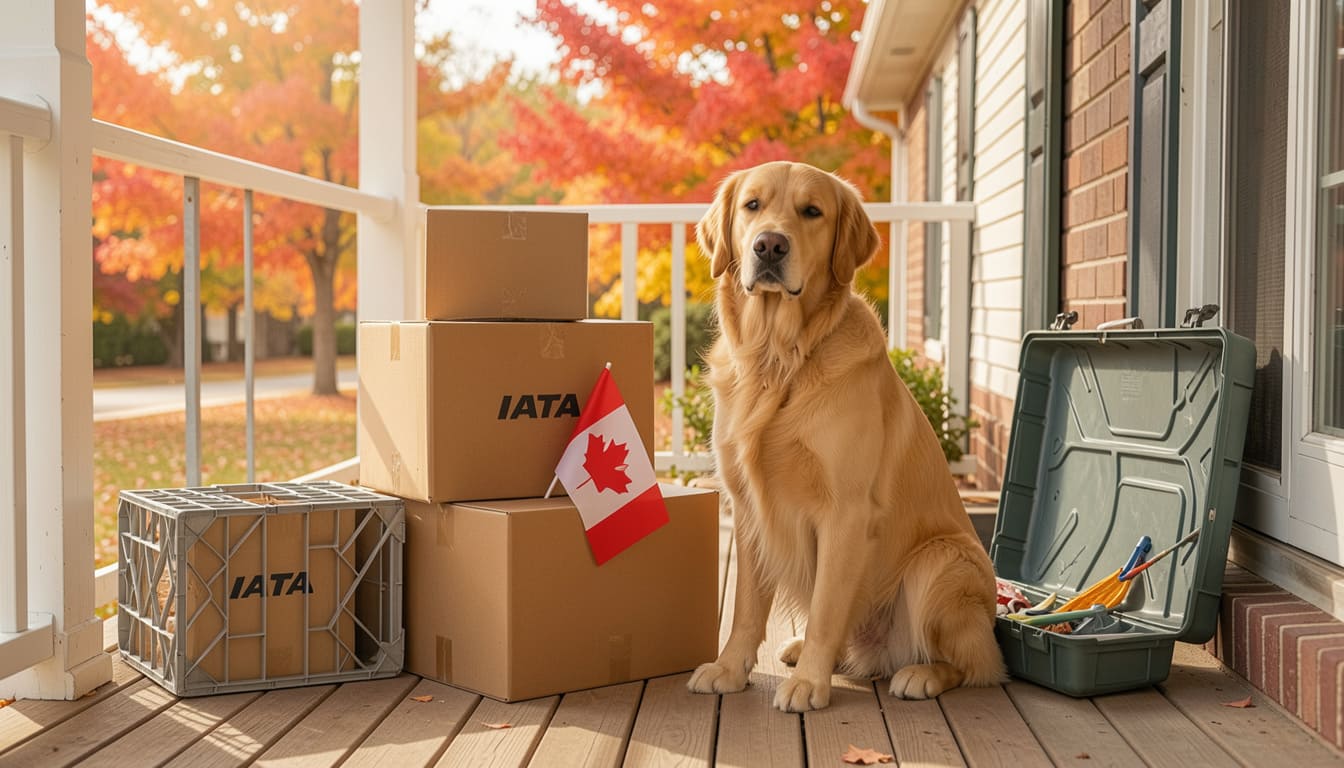
Moving your pet during a Canadian Armed Forces posting
When you receive a posting message from the Canadian Armed Forces (CAF), your pet’s move adds a layer of logistics on top of an already compressed timeline. Whether you are posted within Canada, to the United States, or to an overseas base in Europe, your pet needs their own travel plan with its own paperwork, timing, and costs.
Here is what CAF members need to know about moving a pet during a posting, what the forces cover, and how to plan the move alongside your own relocation.
What the CAF covers (and does not cover) for pet moves
The Canadian Forces Integrated Relocation Program (CF IRP)
The CF IRP, administered by BGRS (now Brookfield Global Relocation Services), covers certain relocation expenses for CAF members. Pet transportation costs fall under the “Personalized Envelope” or incidental expenses in most cases, but coverage varies by posting type:
For domestic postings within Canada, pet transportation is generally considered a personal expense. The Personalized Envelope funds can be applied at the member’s discretion, but there is no dedicated pet transport line item.
For international postings (OUTCAN), the relocation benefits are more comprehensive, but pet shipping costs are still typically handled through the Personalized Envelope or as a separate claim. The specific amount depends on your posting allowances and the destination.
Check your posting instructions and contact your BGRS counsellor early to confirm what pet-related expenses qualify under your specific entitlements. Getting clarity on this before you commit to a shipping plan prevents surprises at reimbursement time.
What you should document for reimbursement
Keep itemized receipts for every pet-related expense: veterinary exam, CFIA export certificate, airline cargo fees, crate purchase, rabies titre test (if applicable), and any professional relocation service fees. Even if not all costs are covered, having complete documentation supports your claim.
Domestic postings: moving your pet across Canada
Most domestic postings involve driving to the new base, and your pet rides along. For members posted coast-to-coast (say, Halifax to Edmonton), the drive is long but straightforward. Pack your pet’s food, water, medications, and familiar items. Plan rest stops every 3 to 4 hours.
If flying to your new posting and your pet is too large for in-cabin travel, you will need to arrange cargo transport separately. Air Canada is the primary option for domestic cargo pet transport. Check the seasonal restrictions in our fall and winter pet travel guide. Air Canada Cargo says that from 1 November to 31 March it does not accept warm-blooded animals as cargo on some of its narrowbody fleet, because their cargo holds are not heated.
OUTCAN postings: the United States
Postings to U.S. bases (NORAD positions in Colorado Springs, exchange postings, liaison roles) are relatively straightforward for pet moves. Key requirements as of 2026:
For a dog that has only been in Canada or another rabies-free or low-risk country in the past six months, the CDC Dog Import Form receipt is the only required documentation. The 2024 CDC rule change applies to Canadian pets entering the United States.
Cats have fewer requirements for U.S. entry. A health certificate and current vaccinations are standard.
If you are driving across the border with your pet, the process is simpler than flying cargo, but you still need the documentation. Border officers can (and do) ask for health certificates.
OUTCAN postings: Europe (NATO bases, exchange postings)
European postings are common for CAF members: NATO headquarters in Belgium, exchange postings in the UK, Germany, or France. The pet import process for EU countries requires:
- ISO-standard microchip (15-digit)
- Current rabies vaccination (administered after the microchip was implanted)
- Veterinary health certificate on the EU-specific form, endorsed by CFIA
- For the UK: tapeworm treatment 24 to 120 hours before entry (mandatory, strict timing)
Start the documentation process as soon as you receive the posting message. For European destinations, 6 to 8 weeks of lead time is usually sufficient if your pet’s vaccinations are current. If a rabies titre test is required (varies by destination and your pet’s vaccination history), add 2 to 4 months.
Breed restrictions at European destinations
Some European countries restrict certain breeds. Germany classifies breeds like American Staffordshire Terriers, Bull Terriers, and Pit Bulls as potentially dangerous, requiring special permits and insurance. The UK bans Pit Bull Terriers entirely. If you own a restricted breed, check the destination country’s rules before accepting the posting or making arrangements.
OUTCAN postings: Asia and Pacific
Postings to Japan (exchange postings or UN positions) or other Asian destinations require the most advance planning:
Japan requires a rabies titre test with a 180-day waiting period from the date of the successful blood draw. If your posting message arrives with less than 7 months notice, your pet physically cannot meet the timeline. In this case, options include having your pet stay with family until the waiting period ends, or exploring interim boarding arrangements.
This is the scenario where early planning is most critical. If there is any possibility of a Japan or Australia posting, consider getting the titre test done proactively. A valid titre test result remains current as long as the rabies vaccination does not lapse.
Posting timeline vs pet shipping timeline
The core tension for CAF members is that military posting timelines do not align with pet import timelines. You may get 6 weeks notice for a posting that requires 7 months of pet preparation (titre test countries). Even for European postings, the CFIA process and airline booking need 4 to 6 weeks that you may not have.
Strategies for managing the gap:
Ship yourself first, pet follows. For postings with tight report dates, you may need to report to the new base on time and have your pet shipped once the documentation is complete. A relocation service can coordinate the pet’s move while you are already in-country.
Family member handles the pet move. If your family is travelling separately or on a later timeline, the pet can travel with them. All documentation must be in the pet owner’s name (the person travelling with the animal).
Pre-position your pet’s documentation. If you know an OUTCAN posting is likely, keep your pet’s rabies vaccination current, get the titre test done, and maintain a valid microchip registration. Having these in place before the posting message arrives saves months.
How we help CAF members
Ready to start planning your pet’s move?
Request a quote and we will put together a detailed plan and price for your specific route.
Prefer to talk? Give us a call at 1-877-707-1739.
Frequently asked questions
Can I ship my pet on a military transport flight?
Military transport flights (CC-177, CC-130) do not typically accommodate personal pets. Pet transport must be arranged through commercial airlines or a pet relocation service.
My posting is to a remote base. Can you still help?
If the final destination does not have a commercial airport, we ship to the nearest major airport and coordinate ground transport for the last segment. For remote Canadian bases (Yellowknife, Goose Bay, Cold Lake), charter options may also be available.
I have two dogs and a cat. Does each need separate paperwork?
Yes. Each animal needs its own health certificate, CFIA endorsement, and (if applicable) titre test and import permit. Airline cargo booking is also per-crate. The costs scale with the number of animals, which is important to factor into your relocation budget.
What if I cannot afford the pet shipping costs and the CF IRP does not cover them?
Speak with your BGRS counsellor about the full range of entitlements and whether any discretionary funds apply. If driving is an option (domestic or cross-border U.S. postings), it dramatically reduces costs. For overseas postings, get quotes from multiple providers and ask about phased payment options.
Sources
Checked August 2026.
- Canadian Armed Forces Relocation Directive. The directive that governs a CAF move, effective 1 April 2026. Chapter 9 covers shipment, storage and sundry relocation expenses.
- CFIA, pets (dogs, cats and ferrets): export certificates. Most pets need an export certificate from a licensed vet, endorsed by an official CFIA veterinarian before the animal leaves Canada. Requirements are listed country by country.
- CFIA, travelling with a pet. Only dogs, cats and ferrets count as pets for CFIA purposes, and destination requirements change often, so they are checked before every trip.
Last updated