
How Pet Relocation Works from Canada: From Your First Call to Delivery
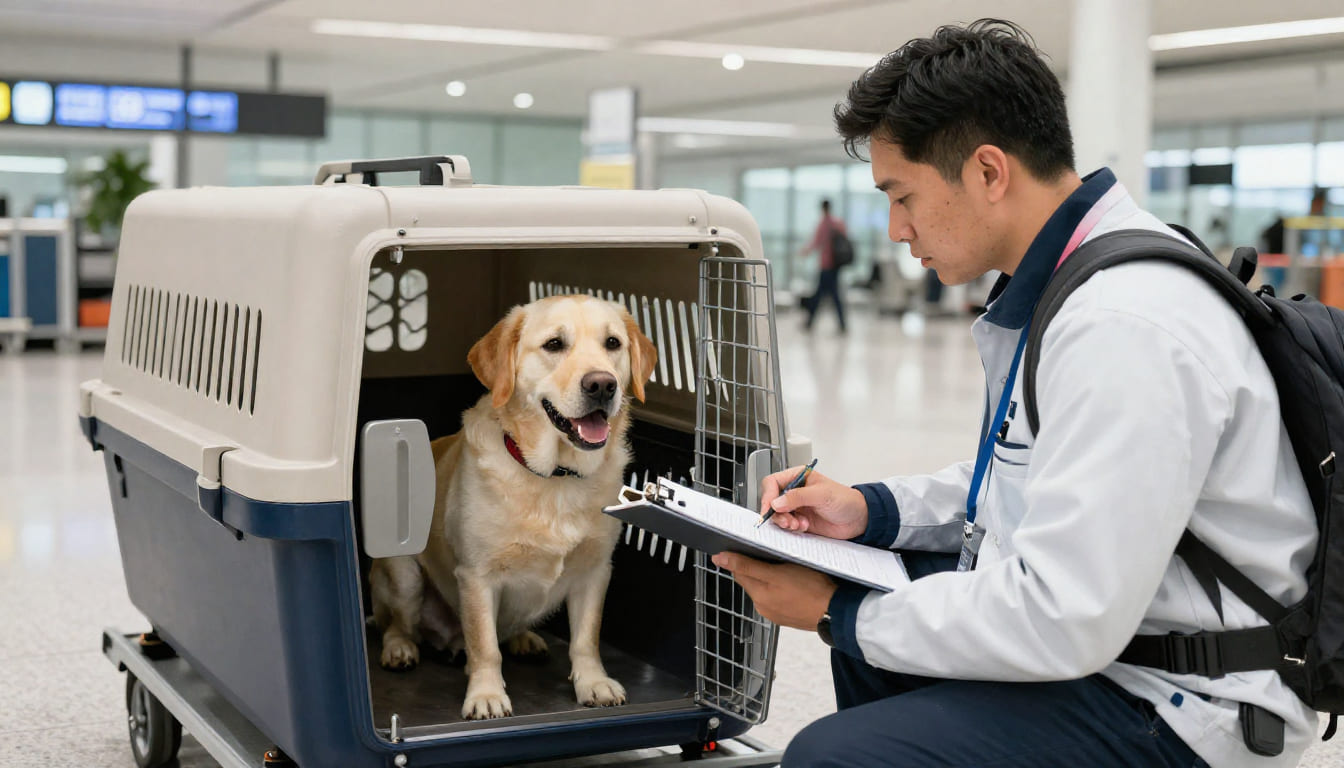
What happens when you hire a pet relocation service in Canada
If you have never shipped a pet internationally before, the process can feel like a black box. You hand over your pet’s details, pay a fee, and somehow your dog or cat arrives in another country. This guide walks through every step of how pet relocation actually works when you ship from Canada, so you know exactly what to expect and when.
Our pet transport services page sets out the three routes a move can take, within Canada, to the United States and overseas, with the ways a pet can fly, CFIA endorsement and winter limits by aircraft.
Step 1: The initial consultation
Ready to start planning your pet’s move?
Request a quote and we will put together a detailed plan and price for your specific route.
Prefer to talk? Give us a call at 1-877-707-1739.
- Your pet’s species, breed, age, and weight
- Your origin city in Canada (Toronto, Vancouver, Calgary, Montreal, etc.)
- Your destination country and city
- Your target travel date or date range
- Any known health conditions or medications
With this information, we research the destination’s import requirements, check airline routes and availability, and identify any complicating factors (breed restrictions, seasonal embargoes, quarantine requirements). The result is a detailed plan and itemized quote.
Step 2: Route planning and airline booking
Not every airline serves every route, and not every route works for every pet. Route planning involves matching your pet’s needs with available flights:
Direct flights are always preferred. A dog flying cargo from Vancouver to London on a direct flight spends roughly 9 hours in transit. Add a connection through a hub, and that becomes 14 to 18 hours with a layover where your pet stays in the airline’s animal handling facility.
Seasonal restrictions affect route availability. Winter embargoes at Canadian departure airports can block cargo transport when temperatures drop below airline minimums. We monitor weather patterns and book flights on dates with the best conditions.
Airline cargo space for live animals is limited. During peak relocation season (summer and December), flights can book up weeks in advance. We secure space early and have backup dates ready.
Step 3: Documentation and health certificate coordination
International pet shipping from Canada requires paperwork from multiple sources, all with specific timing requirements:
The CFIA export certificate is the central document. Your veterinarian examines your pet and completes the destination-specific health certificate form. The Canadian Food Inspection Agency then endorses it. This endorsement gives the certificate legal standing for international travel.
For destinations requiring a rabies titre test, the blood draw and lab processing must happen months before travel. We build this into the timeline from day one.
Import permits are required by some countries and must be applied for in advance. Processing times vary from a few days to several weeks depending on the destination.
We provide your veterinarian with the exact forms, a checklist of what goes on each document, and the specific dates for each vet visit. This prevents the most common cause of delays: incorrect or incomplete paperwork.
Step 4: Crate preparation
Your pet travels in an IATA-compliant crate that must meet specific requirements for airline cargo transport:
The crate must be large enough for your pet to stand, turn around, and lie down naturally. We measure your pet and recommend the correct crate size. Going too small is a safety concern; going too large means the crate may not fit the aircraft’s cargo hold.
The crate must have proper ventilation on at least three sides, a secure locking mechanism, absorbent bedding, and attached food and water dishes. Live animal stickers and handling labels are placed on all sides.
We typically provide the crate as part of the service. Introducing your pet to the crate 2 to 4 weeks before travel helps them acclimate. A familiar blanket or toy inside makes the journey less stressful.
Step 5: The travel day
On the day of travel, the sequence is tightly choreographed:
Your pet is picked up from your home or meets us at a designated location near the departure airport. For departures from Toronto Pearson, Vancouver International, or Montreal Trudeau, we handle the airport logistics directly.
At the airport cargo facility (separate from the passenger terminal), we check in your pet with the airline. This involves presenting the health certificate, CFIA endorsement, import permits, and airline booking confirmation. The airline inspects the crate and confirms everything meets their requirements.
Your pet is transferred to the airline’s climate-controlled animal holding area until the flight boards. Air Canada says its temperature-controlled and ventilated baggage compartments are available only on certain aircraft.
Step 6: In-transit monitoring
Once your pet is in the air, we track the flight and provide you with updates. For flights with connections, we coordinate with the airline’s animal handling team at the transit airport to ensure your pet is transferred safely and on schedule.
If a flight is delayed or cancelled, we activate the backup plan. This may mean rebooking on the next available flight, arranging temporary boarding near the airport, or routing through an alternative hub.
Step 7: Arrival and customs clearance
When the flight lands at the destination, your pet goes through customs and veterinary inspection. The process varies by country:
In the United Kingdom, a veterinary inspector checks the documentation and microchip at the port of entry. Clearance typically takes 2 to 4 hours.
In Australia, your pet goes directly to the quarantine facility for a minimum 10-day stay. We coordinate the quarantine booking in advance.
In EU countries, the border veterinary service inspects documents and may check the pet. Clearance is usually same-day.
We coordinate with a destination agent (if applicable) or provide you with detailed instructions for collecting your pet from the cargo facility at the destination airport.
Step 8: Delivery
Depending on the service level, your pet is either collected by you at the destination airport cargo facility or delivered to your new home by a local agent. Either way, we confirm safe arrival and follow up to make sure your pet is settling in.
How long does the whole process take
From first contact to delivery day, the timeline depends almost entirely on the destination:
- United States: 2 to 4 weeks (documentation only, no titre test)
- United Kingdom or EU: 4 to 8 weeks
- Japan: 7 to 8 months (180-day titre test waiting period)
- Australia: 6 to 8 months (titre test plus quarantine prep)
The earlier you start, the more flexibility you have with travel dates and airline options.
Frequently asked questions
Can I fly on the same flight as my pet?
If your pet is flying cargo, you can often book a seat on the same passenger flight. You will not have access to your pet during the flight, but you arrive at the same time. This is a common arrangement, and we can coordinate the cargo booking with your passenger booking when possible.
What happens if my pet gets sick right before the travel date?
If your pet cannot pass the pre-travel veterinary exam, the health certificate cannot be issued, and travel must be postponed. We rebook the flight and adjust the timeline. This is why we build buffer days into the schedule.
Do you handle cats the same way as dogs?
The process is the same for cats: health certificate, CFIA endorsement, IATA crate, and airline cargo booking. Cats typically require smaller crates and lower airline fees. Some destinations have fewer restrictions on cats than on dogs.
Can you ship pets other than dogs and cats?
We specialize in dogs and cats. Other animals (birds, rabbits, reptiles) have very different requirements and airline rules. If you need to move a non-standard pet, contact us and we can advise whether we can help or refer you to a specialist.
Sources
Checked August 2026.
- CFIA, pets (dogs, cats and ferrets): export certificates. Most pets need an export certificate from a licensed vet, endorsed by an official CFIA veterinarian before the animal leaves Canada. Requirements are listed country by country.
- CFIA, travelling with a pet. Only dogs, cats and ferrets count as pets for CFIA purposes, and destination requirements change often, so they are checked before every trip.
- IATA, live animal handling and transport. The Live Animals Regulations, the worldwide standard airlines work to.
Last updated