
Pet Travel Risks in Canada: Documentation, Crate Compliance, and Routing Explained
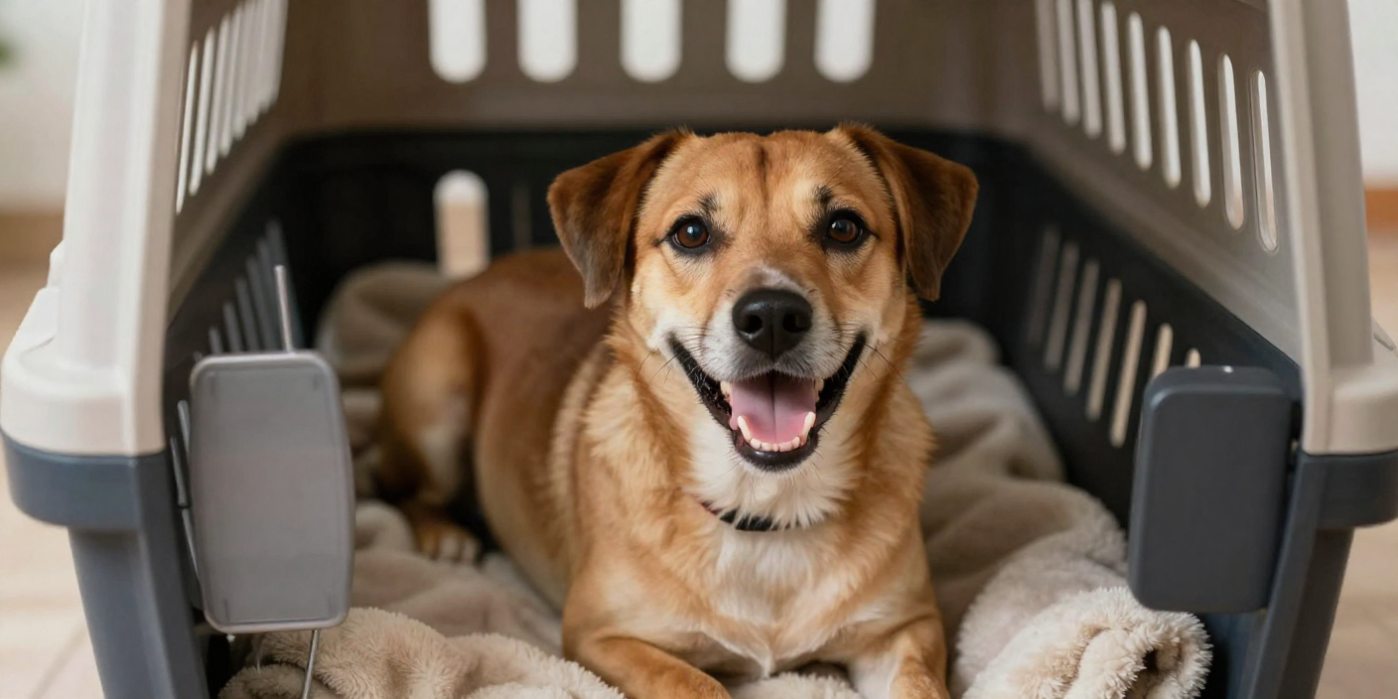
Your pet’s journey is more than a booked flight.
For any move within, to, or from Canada, safe and compliant pet travel depends on three critical elements:
- Correct and complete documentation
- An airline-compliant, properly sized travel crate
- A route planned with animal welfare and regulations in mind
When any of these elements is incomplete or incorrect, airlines, border authorities, or government veterinarians can refuse carriage or entry. The result is often not just inconvenience for the owner, but additional stress and potential risk for the animal.
At Pet Travel Advisors, we focus on educating pet owners so they understand why these requirements exist and how to avoid avoidable problems. This guide outlines the main risks associated with incomplete documentation, inappropriate travel crates, and unsuitable routing, and how we help reduce those risks.
1. Incomplete or incorrect documentation: why accuracy is non-negotiable
International and many domestic pet journeys require a precise set of documents. Depending on the route, this may include:
- Rabies vaccination certificates
- Official health certificates (CFIA or the competent authority in the destination country)
- Airline-specific live animal forms
- Import permits for certain destinations
- Vaccination and treatment records (e.g., parasite control)
- Microchip certificates and identification details
When even one element is missing or inaccurate, your pet’s travel may not proceed as planned.
What can happen when documentation is incomplete
Common outcomes when paperwork is not in order include:
- Denied at airline check-in
Airline staff are trained to refuse animals if documentation does not meet published standards. This can mean cancelled travel with no immediate solution. - Refusal or delay at destination
Border veterinarians or quarantine authorities may:- Hold the animal for further inspection (with associated fees)
- Require return to origin at the owner’s cost
- Impose quarantine or additional testing
- Emergency last-minute changes
Owners may find themselves searching for an available veterinarian on the day of travel, sometimes in a different city or country, to correct a document or reissue a certificate. - Unplanned expenses
Rebooking, kenneling, transport to alternative facilities, and extended accommodation can significantly increase the overall cost of the move.
Frequent document errors
Even well-prepared owners encounter issues such as:
- Incorrect timing of rabies vaccinations
Vaccinations given too late, too early, or not in compliance with specific destination regulations. - Microchip problems
Pet vaccinated before microchipping, mismatched microchip numbers, or numbers recorded incorrectly on official certificates. - Wrong or incomplete health certificate
Using a generic letter instead of an official export/import certificate, or missing required sections (e.g., treatments, identification). - Missing endorsements or stamps
For some international routes, a government authority (such as CFIA) must endorse the health certificate. A local vet’s signature alone may not be sufficient. - Inconsistent personal details
Owner names, addresses, or pet names that differ between documents and bookings can raise compliance questions.
How Pet Travel Advisors supports owners with documentation
For Canadian clients, we:
- Identify the exact document set required for the specific route, airline, and destination
- Build a timeline for vaccinations, health certificates, and endorsements so they fall within required validity windows
- Review documents ahead of travel to flag inconsistencies or missing information
- Advise on destination specific rules, such as blood tests, parasite treatments, or quarantine requirements
Our goal is to prevent problems at check-in and at the border by ensuring documents are correct before the journey begins.
2. Inappropriate travel crates: safety and compliance, not just convenience
A travel crate is more than a container; it is a safety device designed to protect your animal in a busy airport and cargo environment.
Crates that are the wrong type, size, or design are a frequent reason for pets being refused at check-in.
Risks associated with the wrong crate
Common issues include:
- Crate too small
The pet cannot stand, turn around, or lie down comfortably. This is not only unacceptable from a welfare perspective, but often non-compliant with airline and IATA guidelines. - Crate too large
Excessive space may sound kind, but in turbulence or rough handling, an animal can be thrown about, increasing the risk of injury. - Non compliant construction
Soft-sided, wire, collapsible, or heavily modified crates often do not meet airline standards for checked baggage or cargo. - Weak doors or latches
A stressed animal may be able to force open an inadequate door or latch, creating serious safety concerns in restricted airport areas. - Unapproved modifications
Wheels, aftermarket attachments, or home-made adjustments to ventilation can trigger rejection by airline staff.
Warning signs your crate may not pass
Your crate may not be acceptable if:
- It is soft-sided and your pet is flying as checked baggage or cargo (rather than in-cabin).
- The top and bottom halves are connected only by plastic clips, with no secure metal bolts.
- Your pet’s ears brush the ceiling when standing normally.
- Your pet’s nose touches the door when fully stretched out.
- You can bend the door or wall panels easily by hand.
How we help with crate selection and preparation
We guide owners on:
- Accurate measurements
Proper height, length, and width measurements so the crate offers appropriate room without compromising safety. - Selecting compliant models
Recommending crate types and brands that generally meet airline and IATA-style standards for the pet’s size and breed. - Interior setup
Suitable absorbent bedding, safe water arrangements, and what should and should not be placed inside the crate. - Crate acclimation
Providing step-by-step guidance so the pet becomes comfortable and relaxed in the crate well before travel day.
A compliant, familiar crate significantly reduces stress and increases the likelihood of a smooth check-in.
3. Unsuitable routing: when a “good” itinerary is not good for animals
A route that appears efficient or inexpensive on a flight-search website may not be appropriate for live animals.
Factors that make routing risky
Key concerns include:
- Extreme temperatures
Departures or arrivals during peak heat in summer or severe cold in winter, especially in airports without adequate animal facilities. - Overly tight connections
Pets require time to be unloaded, transported to animal handling areas, security-checked, and reloaded. Connections that are acceptable for human passengers may be unrealistic for animals. - Multiple connections
Each additional leg increases handling, regulatory checks, and potential for delay or misrouting. - Unsuitable hub airports
Not all airports have the same infrastructure, staffing, or protocols for animal care and transfer. - Non-compliant entry points
Some countries require pets to arrive via specific approved airports. Using other routes can lead to refusal or re-routing.
How routing problems appear on travel day
Unsuitable routing can result in:
- Prolonged time in holding areas due to missed or delayed connections
- Last-minute off-loading because of temperature restrictions
- Documents expiring mid-journey if delays push dates beyond validity windows
- Owners and pets arriving in different places at different times, complicating reunions and care
Our approach to route planning
At Pet Travel Advisors, route planning is based on animal welfare, regulations, and realistic handling times, not just flight price or convenience. For Canadian routes we:
- Avoid known temperature extremes when possible
- Prioritize hubs with better animal handling capabilities for long-haul or complex itineraries
- Ensure connection times are appropriate for animal transfers
- Align flight schedules with documentation validity and import requirements
- Adjust routing for higher-risk animals (short-nosed breeds, seniors, animals with medical conditions)
This approach reduces the likelihood of last-minute cancellations, refusals, or welfare concerns.
4. How Pet Travel Advisors can assist with your move
If you are planning a move:
- Within Canada
- From Canada to another country
- To Canada from abroad
we can assist by:
- Reviewing planned routes for regulatory and welfare concerns
- Confirming documentation requirements and timelines
- Assessing crate compliance and sizing
- Coordinating with airlines that routinely handle live animals on your route
- Advising on seasonal considerations and destination-specific regulations
Our objective is to ensure that the journey is legally compliant, ethically sound, and as low-stress as possible for your pet.
Plan your pet’s journey with confidence
If you have any doubt about your documents, crate, or routing, it is best to resolve those questions well before travel day.
Pet Travel Advisors:
📍 Supporting pet relocations within Canada and internationally
📞 Phone: 1-877-707-1739
✉️ Email: info@pettraveladvisors.com
🧾 Request a Quote
We do more than arrange transport.
We help you understand and manage the risks, so your pet travels safely, legally, and with the highest standard of care.
Checking a Carrier’s Record, and Why It Is Harder From Canada
There is a public record of animal incidents in air transport, and it is worth knowing both what it covers and what it does not, because from Canada the answer is uneven.
Under United States regulation 14 CFR part 235, any US carrier running scheduled passenger service with at least one aircraft of more than 60 seats must report to the US Department of Transportation every incident involving the loss, injury or death of an animal in its care, within 15 days of the end of that month. Each report names the carrier and flight number, the date and time, a description of the animal, and narratives of what happened, what caused it and what the airline did about it. Covered carriers also file an annual total of animals transported alongside their incident total, which is the denominator that makes any of those numbers meaningful.
The requirement is written for US carriers. Air Canada and WestJet are not US carriers, so a Canadian domestic move on a Canadian airline does not appear in that record at all.
Where it does help a Canadian is the cross-border move. If your routing puts the animal on a US carrier, on a flight south or on a connection through an American hub, that carrier is covered and its record is published monthly in the US Department of Transportation’s Air Travel Consumer Report, which is free to read.
For a Canadian carrier the check is a different one: read what the airline commits to in writing. Air Canada publishes its temperature restrictions, its seasonal limits, the tender window at the cargo counter and the conditions under which it will refuse an animal, and those commitments are the closest thing to a published standard you can hold it to. Our Air Canada pet policy guide sets them out.
Two cautions apply to either route. An absence of reports is not evidence of an absence of incidents, and a single incident tells you very little on its own. What is worth reading is whether incidents cluster around one cause, because the cause is part of what a covered carrier has to file.
Frequently asked questions
What are the most common documentation mistakes in pet travel?
The ones that come up most often: rabies vaccinations timed too early or too late for the destination’s rules, a pet vaccinated before being microchipped, microchip numbers recorded incorrectly on certificates, and generic vet letters used where an official export or import certificate is required. Any one of these can stop a move at the counter.
How do I know if my travel crate will be accepted?
Quick self-check: the crate fails if it is soft-sided but your pet flies as cargo or checked baggage, if the halves connect with plastic clips instead of metal bolts, if your pet’s ears brush the ceiling when standing, if the nose touches the door when stretched out, or if you can flex the door or walls by hand. Airlines check exactly these points.
What makes a flight routing risky for a pet?
Tight connections, extreme temperatures at connection points, and itineraries built for the humans rather than the animal. A routing that looks efficient on paper can leave a pet sitting on a hot tarmac or missing a transfer window, so pet-safe routing is planned around the animal first.
Can my pet be denied boarding even with a booked flight?
Yes. A booked flight is not a guarantee of travel. Incomplete documents, a non-compliant crate, or temperature limits on the day can all lead to a denied boarding. That is why documentation, crate, and routing are treated as one package rather than three separate chores.
Related resources
- Explore all destinations we serve from Canada
- Our pet relocation services
- Request a quote for your pet’s journey
- Pet relocation from Canada to Australia: quarantine guide
- How to make your pet less stressed while travelling
- What an airline is liable for if a pet is lost or hurt
Sources
Checked August 2026.
- CFIA, pets (dogs, cats and ferrets): export certificates. Most pets need an export certificate from a licensed vet, endorsed by an official CFIA veterinarian before the animal leaves Canada. Requirements are listed country by country.
- IATA, pet corner for travellers. Crate sizing by formula, advance airline confirmation, pre-flight feeding, and the case against sedation.
- Air Canada, travelling with your pet. Cabin and baggage compartment rules, advance registration, the brachycephalic restriction, and the soft-sided carrier rule introduced on 1 June 2025.
Last updated